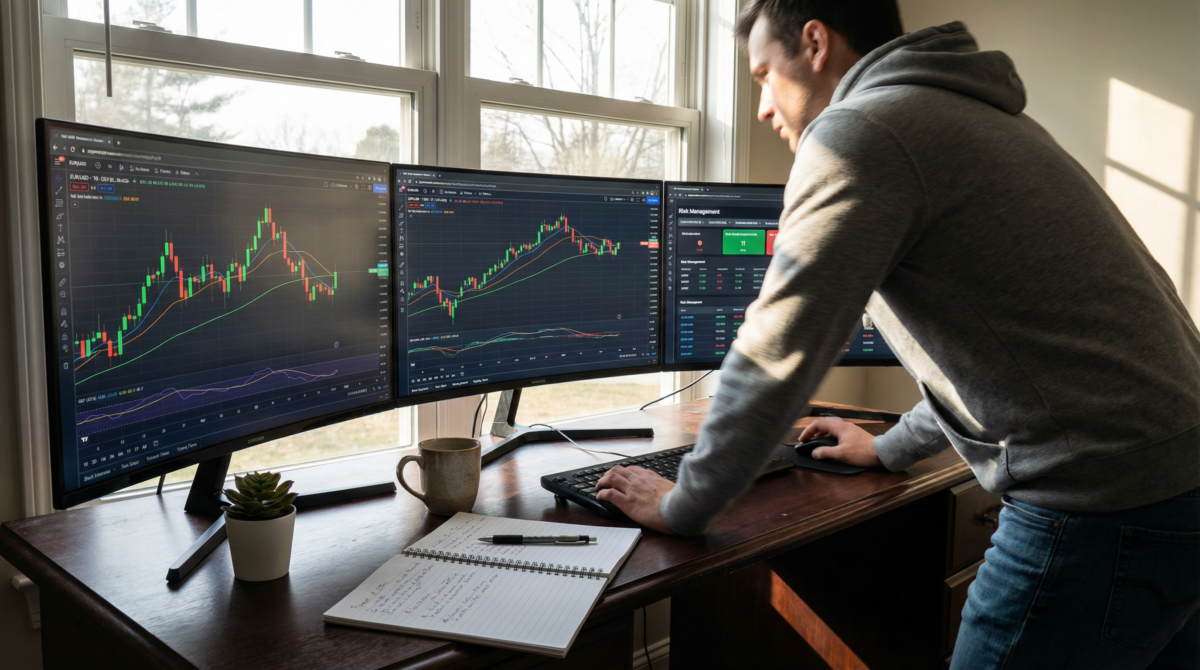
Mastering Forex Risk Management: A Beginner’s Personal Playbook for Smart Trading
If I’m being honest, when I started trading forex, risk management sounded about as exciting as watching paint dry. But over the years—through painful lessons, unexpected wins, and countless cups of coffee—I’ve come to realize that managing risk is, quite frankly, the secret sauce. Without it, you’re just gambling, not trading.
Why Risk Management in Forex Isn’t Optional
Here’s the thing though—forex trading feels like a fast-paced game with real money on the line. The market moves (sometimes wildly), and if you don’t have a safety net, your account can vanish faster than you can say ‘stop loss.’ Honestly, I think many beginners underestimate how important it is to protect their capital first.
It’s not about avoiding loss completely—that’s impossible—but about making sure losses don’t wipe you out. Think of risk management as your trading seatbelt. You need it.
The Reality Check: I Lost $500 on My First Week
Just so you know, this isn’t theoretical. My first week trading, I blew $500 because I didn’t set stop losses and used way too much leverage (more on that later). It was the coldest splash of reality: I realized that without managing risk, my trading ‘strategy’ was just wishful thinking.
Core Risk Management Strategies That Actually Work
Over time, I tested many approaches. Some felt too rigid; others were too loose. Here’s what stuck and what I’d recommend to any forex newbie serious about keeping their money safe.
1. Position Sizing: Don’t Bet the Farm
Keeping your trade size manageable is crucial. A rule I follow is never risking more than 1-2% of my trading account on a single trade. Why? Because even if the trade goes south, my account still has room to breathe.
Example: If your account has $1,000, risking 2% means you won’t lose more than $20 per trade. Small enough to survive multiple losses, big enough to stay in the game.
2. Use Stop Loss Orders Religiously
This one surprised me when I first heard it—but stop losses are your best friend. They automatically close your position if the market hits a certain price, preventing runaway losses.
Now, this is where it gets interesting: setting your stop loss too tight can get you stopped out prematurely, while too wide could mean big losses. Finding that sweet spot requires practice and understanding market volatility.
Tip: Use Average True Range (ATR) indicators to gauge typical price movement and place stops accordingly.
3. Beware of Leverage—It’s a Double-Edged Sword
Leverage amplifies both gains and losses. I’ve tested this the hard way (remember my $500 wipeout?). Using 50:1 or 100:1 leverage may sound tempting, but honestly, it’s a ticking time bomb for beginners.
Stick to lower leverage—say 10:1 or less—until you get comfortable. Want to dive deeper into this? Check out this guide for practical tips.
4. Diversify Your Trades: Don’t Put All Eggs in One Basket
It’s tempting to go all-in on a currency pair because it looks promising. But I’ve learned to spread risk across different pairs or even different assets when my broker allows it.
If you want brokers that offer multi-asset trading to help with diversification, see our recommendations here.
Real-World Example: How I Applied Risk Management to Recover a Losing Streak
Back in early 2022, after a rough patch where my account dropped nearly 30%, I revamped my approach. I started rigorously applying position sizing and stop losses, and cut my leverage from 25:1 to 5:1. Within three months, I clawed back 15% gains without any crazy risk.
This experience solidified my belief: patience and discipline beat chasing big wins every day.
Comparing Risk Management Tools Offered by Top Forex Brokers
Not all brokers are created equal when it comes to risk management tools. Some platforms offer built-in risk calculators, guaranteed stop losses, or negative balance protection (which I personally swear by).
| Broker | Negative Balance Protection | Guaranteed Stop Loss | Risk Calculator Tool | Minimum Leverage Offered |
|---|---|---|---|---|
| Broker A | Yes | Available | Yes | 1:1 |
| Broker B | No | No | No | 5:1 |
| Broker C | Yes | Available (Extra Fee) | Yes | 10:1 |
| Broker D | Yes | No | Basic | 2:1 |
Remember, choosing the right broker for your risk tolerance is just as important as your trading strategy. For a deep dive into broker fees and commissions that affect your net risk, take a peek at this article.
What Does Research Say About Forex Risk Management?
A notable study published by the FCA in 2020 found that 74% of retail forex traders lose money, largely due to poor risk management (FCA, 2020). This statistic hit home for me—if most traders fail, better risk controls can be a differentiator.
Another interesting point: research suggests that traders who risk less than 2% per trade have a significantly higher chance of long-term survival. Makes sense, right?
Common Pitfalls to Avoid
- Ignoring Stop Loss: This is like swimming without a lifebuoy. Don’t do it.
- Chasing Losses: Emotional trading leads to bigger losses. Step back, breathe.
- Too Much Leverage: You’re not a superhero—use leverage wisely.
- Overtrading: More trades ≠ more profit. Sometimes less is more.
Wrapping Up (But Not Really)
Look, risk management isn’t glamorous. It’s not about flashy charts or quick riches. It’s about safeguarding your future in this wild forex jungle. Take it from someone who’s been burned and learned the hard way—you’re not just trading currency pairs; you’re trading your time, effort, and dreams.
If you want to keep learning and find brokers who prioritize safety and beginner-friendly features, check out our top broker reviews.
Ready to protect your trades like a pro? Start by opening an account with a trusted broker that offers solid risk management tools and low leverage options. (If you want my personal recommendation, I’ve tested and partnered with a few—I’ll link you at the end.)
Here’s to smart trading and fewer sleepless nights!
FAQ
CTA: Ready to practice these risk management techniques with a broker who’s got your back? Sign up with Broker A today and start trading smarter, not harder.