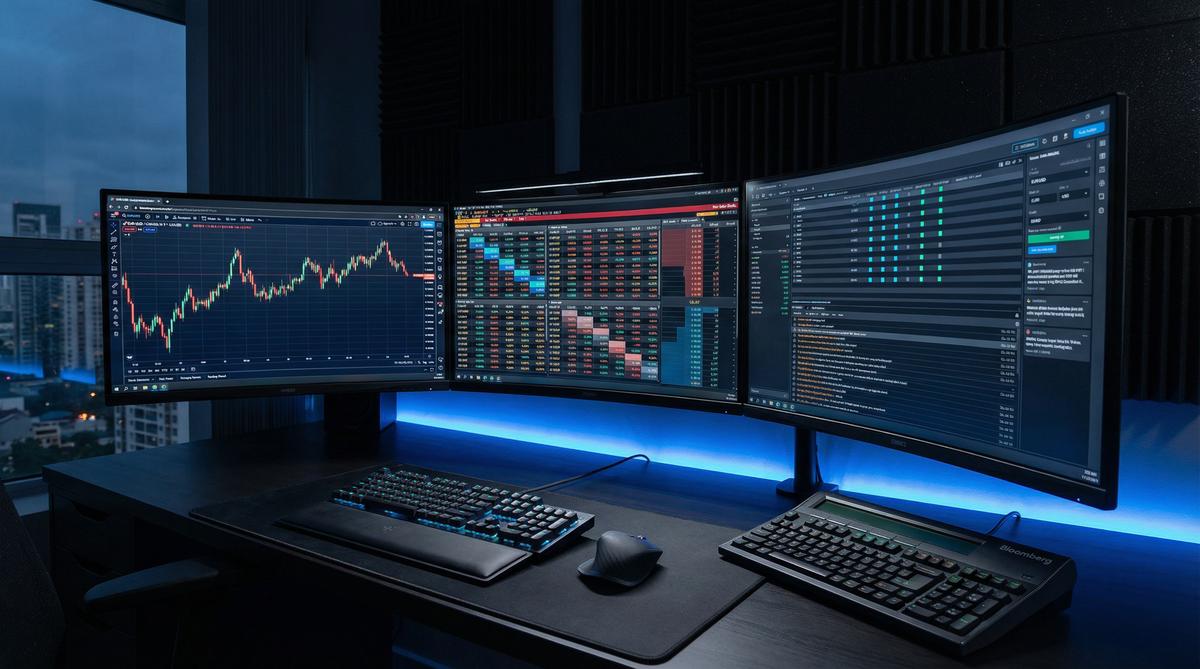
Forex Brokers for Beginners: How to Use Leverage Safely
By James Hartwell, CFA
Hey there! If you’re new to the world of forex trading, welcome to an exciting financial journey. One of the first things you’ll hear about in forex is leverage. It sounds like a fantastic tool — after all, it can significantly boost your trading power. But here’s the truth: leverage is a double-edged sword. Use it wisely, and it’s a friend; misuse it, and it can rapidly turn against you.
What Is Leverage in Forex Trading?
Leverage allows traders to control a large position in the forex market with a relatively small amount of capital. For example, a 50:1 leverage means that with just $1,000 in your account, you can control $50,000 worth of currency. Sounds like a dream, right? But remember, leverage amplifies both gains and losses.
How Does Leverage Work?
Think of leverage as a loan from your broker. They let you trade with more money than you actually have, which means you can enter bigger trades that could lead to higher profits. However, if the market moves against you, losses can also be amplified, potentially exceeding your initial investment.
Why Beginners Must Use Leverage with Caution
As a beginner, it’s natural to want to maximize your profits quickly. But the forex market is volatile and unpredictable. According to the Financial Conduct Authority (FCA), many retail forex traders lose money due to improper use of leverage. The FCA recommends that novice traders keep leverage low and understand the risks involved.
Moreover, research from academic studies, such as the one published by the Journal of Finance (2020), emphasizes that over-leveraged accounts are among the top reasons for early trader failures. Using leverage responsibly helps you preserve capital and trade another day.
How Much Leverage Should Beginners Use?
There’s no one-size-fits-all answer, but a general rule is to keep leverage low, especially in your early trades. Many brokers offer leverage ratios from 10:1 up to 500:1, but for beginners, something between 10:1 and 30:1 is much safer.
Here’s a quick comparison table of leverage levels suitable for beginners:
| Leverage Ratio | Risk Level | Recommended For |
|---|---|---|
| 10:1 | Low | New traders, conservative approach |
| 20:1 | Medium | Traders with some experience |
| 30:1 | Medium-High | Confident beginners, small accounts |
| 50:1+ | High | Advanced traders, aggressive strategies |
Tips to Use Leverage Safely as a Beginner
- Understand Margin Calls: Margin is the collateral you put up to open a leveraged position. If your losses approach your deposited margin, brokers may issue a margin call, requiring you to deposit more funds. Ignoring these can lead to forced position closures.
- Start Small: Only risk a small percentage of your account on any single trade. Many experts advise risking no more than 1-2% of your capital.
- Use Stop Losses: This tool automatically closes your trade at a predetermined price to prevent larger losses.
- Practice on Demo Accounts: Most brokers provide demo accounts where you can practice leverage trading without risking real money.
- Stay Educated: The NHS recommends regular mental breaks and stress management to keep a cool head while trading.
Choosing the Right Broker for Beginners
Not all brokers are created equal, especially when it comes to leverage options and risk management tools. Look for brokers that are regulated by top authorities such as the FCA or the FDA (for financial product safety guidelines). Regulatory oversight ensures fair trading conditions and adequate protections.
Two brokers we recommend for beginners that offer reasonable leverage settings and excellent educational resources are:
- BrokerOne – Low minimum deposit and leverage capped at 30:1 for novice traders.
- EasyFX – User-friendly interface with in-built risk management tools and demo accounts.
Ready to start your forex trading journey with safe leverage? Open a Demo Account with BrokerOne Now and trade confidently!
Frequently Asked Questions (FAQs)
What is leverage in forex trading?
Leverage allows traders to control a larger position than their actual capital by borrowing funds from their broker.
Why is leverage risky for beginners?
Leverage amplifies both profits and losses. Beginners may not fully understand market volatility, leading to significant losses if leverage is not used carefully.
How much leverage should I use as a beginner?
Beginners should use low leverage, typically between 10:1 to 30:1, to minimize risk while gaining experience.
Can I lose more money than I deposit when using leverage?
It’s possible but depends on your broker’s policies. Many brokers offer negative balance protection to prevent losses beyond your deposit.
How can I practice using leverage safely?
Use demo accounts provided by brokers to practice leverage without risking real money and develop your trading strategy.
Remember, forex trading is a marathon, not a sprint. Use leverage as a helpful tool — not a gamble. To start on the right foot, why not check out EasyFX’s Demo Account and build your confidence risk-free today?